How to Choose the Right Air Conditioner
Discover 8 essential criteria to pick the perfect AC and save up to 40% on energy bills
Ever stop to think that choosing the wrong air conditioner could cost you an extra $800 a year on your electric bill? With so many options, technologies, and technical specs out there, it's easy to get lost among BTUs, Inverters, Split systems, and Window units.
The truth is, a good AC does way more than just cool your space. It needs the right power for your room size, smart energy consumption, and real comfort without breaking the bank.
In this complete guide, you'll discover exactly how to choose the perfect air conditioner for your needs. I'll show you the 8 essential criteria that make all the difference, from proper BTU calculations to technologies that actually save energy.
By the end, you'll be ready to make a smart investment that'll keep you comfortable for the next 10 years.


Table of Contents
- Why Choosing the Right AC Makes All the Difference
- Types of Air Conditioners: Understanding the Differences
- How to Calculate BTUs: The Secret to Perfect Cooling Power
- Inverter Technology: Real Savings or Just Marketing
- Energy Efficiency: ENERGY STAR Ratings and Savings
- 8 Essential Criteria Before Buying
- Costly Mistakes When Choosing an AC
- Frequently Asked Questions
- Conclusion
Why Choosing the Right AC Makes All the Difference
Buying an air conditioner isn't like picking up a fan. The wrong choice can mess with your comfort for years and drain hundreds of dollars every month from your power bill.
The impact goes beyond your wallet. An undersized unit works constantly at maximum capacity, pushing the compressor to its limits and dramatically shortening its lifespan. You'll end up replacing the equipment in 3-5 years instead of the normal 10-12 years.
The Real Cost of a Bad Choice
Most folks only look at the purchase price and forget about operating costs. But check this out: a conventional 12,000 BTU air conditioner running 8 hours daily burns about $1,800 yearly in electricity. An efficient Inverter model drops that to $1,080, saving you $720 annually.
Over 5 years, you save $3,600 - enough to cover the difference between a basic model and a top-tier unit with all the energy-saving tech.
Comfort takes a hit too. An AC with insufficient BTUs never reaches your target temperature, leaving the room muggy even when running 24/7. Meanwhile, an oversized unit cools too fast without completing the dehumidification cycle, leaving that uncomfortable clammy-cold feeling.
Respiratory health: Poorly chosen or unmaintained air conditioners can tank your air quality. Models with advanced filters remove up to 99% of dust, mites, and bacteria, especially helpful for kids and people with allergies or asthma.
To max out your environment, check out our soundbar guide that perfectly complements climate-controlled spaces.
Types of Air Conditioners: Understanding the Differences
Each AC type has specific characteristics that make it ideal for certain situations. Knowing these differences is key to making the right call.
Split: The Sales Champion
Split air conditioners are hands-down the most popular in the U.S., accounting for roughly 75% of sales. They split into two units: the evaporator (indoor) and condenser (outdoor), connected by copper tubing.
How it works in practice: The indoor unit sits inside your space, distributing cool air quietly. The noisy part (compressor) stays outside, eliminating that annoying racket.
Main advantages:
- Super quiet operation (30-40 decibels, like a whisper)
- Modern design that enhances your décor
- Better energy efficiency compared to window units
- Even air distribution throughout the room
- Available in heat-pump versions for winter use
Things to consider:
- More complex installation requires a pro
- Initial investment 30-50% higher than window units
- Maintenance requires cleaning two separate units
Best for: Bedrooms, living rooms, home offices, and any space where quiet and efficiency matter. Perfect if you value aesthetics and plan to use it many hours daily.
If you work from home, also check our tech accessories for home office guide to create the perfect workspace.
Split Inverter: Cutting-Edge Technology
The Split Inverter is the evolution of the conventional Split. The difference? A variable-speed compressor that automatically adjusts power based on room temperature.
How it works: Instead of the on-off cycle of conventional models, the Inverter compressor varies its rotation speed. When the room hits your target temp, it just reduces power instead of shutting off completely.
Real savings: Independent tests confirm up to 40-60% reduction in energy consumption compared to conventional models. With heavy use, that's $70-100 monthly savings on your electric bill.
Main advantages:
- Up to 60% lower consumption with prolonged use
- More stable temperature without fluctuations
- Compressor lasts up to 50% longer
- 30% faster cooling in the initial phase
- Even quieter operation
Best for: Spaces with frequent and prolonged use (more than 4 hours daily). The higher upfront investment pays for itself quickly through energy savings.
Window Air Conditioner: Budget-Friendly Solution
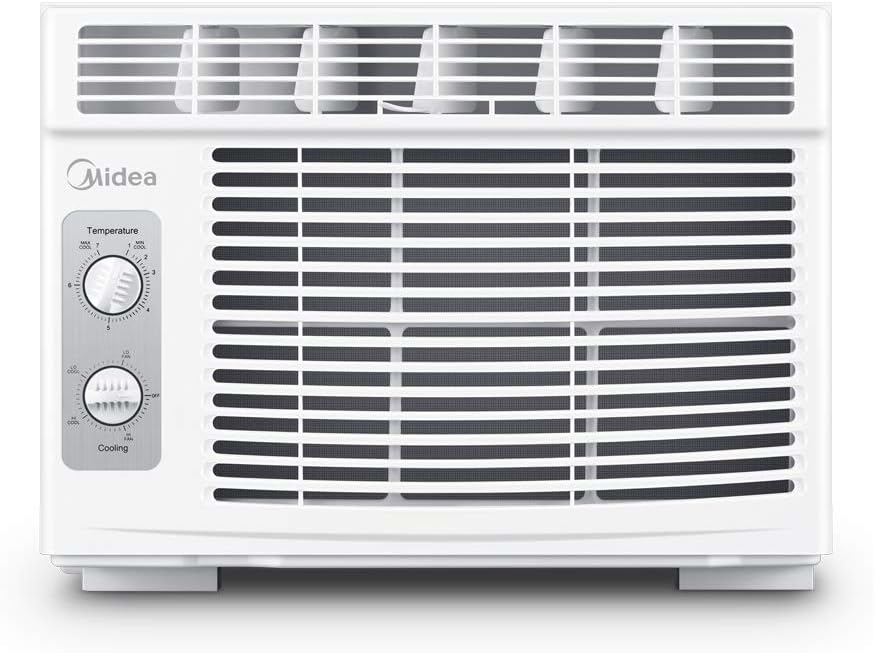
Window models pack all components into a single block. Despite being considered outdated by many, it's still a solid option for tight budgets.
Main advantages:
- Price 40-60% lower than Split models
- Simpler and cheaper installation
- More affordable maintenance (single unit)
- No need for external tubing
Things to consider:
- High noise level (60-65 decibels) disrupts sleep and concentration
- Energy consumption 30-40% higher than Split Inverter
- Less modern design might hurt aesthetics
- Takes up window space, blocking natural light
- Requires specific wall opening
Best for: Occasionally-used spaces, tight budgets, or temporary situations where you can't make a bigger investment. Good option for commercial offices where noise isn't an issue.
Portable: Flexibility With Limitations
Portable air conditioners are self-contained and require no permanent installation. Sounds practical, but they have serious performance limitations.
Main advantages:
- Zero installation: just plug it in
- Total mobility between rooms
- Ideal temporary solution for rentals
- No condo board approval needed
Things to consider:
- Efficiency 50% lower than Split models
- High energy consumption for the capacity
- Noisier than Splits (even in quiet mode)
- Requires exhaust hose near a window
- Limited capacity (usually up to 12,000 BTUs)
Best for: Occasional use, rentals where you can't install a Split, or as a temporary fix. Not recommended for continuous use due to low efficiency.
How to Calculate BTUs: The Secret to Perfect Cooling Power
BTU stands for British Thermal Unit and measures the AC's ability to remove heat from a room. Nailing this calculation is absolutely critical for comfort and savings.
Basic Formula to Start
The general rule is using 20-25 BTUs per square foot. But that's just the starting point. Several factors influence the final calculation, and ignoring them leads to the wrong choice.
Step 1 - Calculate base area: Multiply length x width of the space. For example: a 15 x 20 foot room = 300 sq ft.
Step 2 - Apply base rule: 300 sq ft x 20 BTUs = 6,000 BTUs (for shaded rooms) 300 sq ft x 25 BTUs = 7,500 BTUs (for heavy sun exposure)
But don't stop there! You need to consider additional factors.
Factors That Increase BTU Requirements
Direct sunlight: If the room gets strong sun during the day (especially afternoon), add 10% to your base calculation. Sunlight heats walls and windows, demanding way more power from the unit.
People in the room: Each person generates approximately 340 BTUs of body heat. Add 600 BTUs for each additional person (the first is already in the base calculation).
Heat-generating electronics: Computers, TVs, gaming consoles, and other devices increase thermal load. Add 600 BTUs per constantly-running device.
High ceilings: Rooms with ceilings above 9 feet have more air volume. Add 15-20% to your final result.
Complete Practical Example
Let's calculate for a 160 sq ft bedroom with afternoon sun, used by 2 people, with 1 computer and 1 TV:
- Base with sun exposure: 160 sq ft x 25 BTUs = 4,000 BTUs
- 1 extra person: 600 BTUs
- 2 electronics: 1,200 BTUs (600 x 2)
- Total: 4,000 + 600 + 1,200 = 5,800 BTUs
Final decision: In this case, the ideal would be a 6,000 BTU unit. Why? Because it's always better to have a safety margin than a unit working at its limit.
Pro Tip: Between two close values, always choose the larger one. A slightly oversized unit operating at 80% capacity consumes less energy and lasts longer than an undersized one running at 100% all the time.
If you're building a complete setup, don't miss our gaming monitors guide that also helps properly climate your gaming space.

Inverter Technology: Real Savings or Just Marketing?
Inverter technology is one of the most significant advances in air conditioning over the past decades. But is it really worth the extra investment?
How It Works in Practice
In conventional models, the compressor operates in an on-off cycle: runs at maximum power until reaching your target temperature, then shuts off completely. When temperature rises again, it starts from zero, burning tons of energy in that initial spike.
The Inverter compressor is completely different. It never shuts off. When the room hits your programmed temperature, the compressor just reduces its rotation speed to maintain that temperature constantly.
Simple analogy: It's like driving a car. The conventional model accelerates to 60 mph then brakes to a stop, repeating constantly. The Inverter maintains steady cruising speed - way more efficient.
Proven Savings in Numbers
Studies confirm that Inverter technology can reduce energy consumption by up to 40% under real-world conditions. Let's break down the practical numbers:
Conventional 12,000 BTU air conditioner:
- Monthly consumption: 150 kWh
- Cost at average $0.15/kWh rate: $127.50/month
- Annual cost: $1,530
Inverter 12,000 BTU air conditioner:
- Monthly consumption: 90 kWh (40% less)
- Cost at average rate: $76.50/month
- Annual cost: $918
Annual savings: $612
Over 5 years of use, you save $3,060 - way more than enough to offset the higher initial investment.
Benefits Beyond Savings
Superior thermal comfort: Temperature stays stable without fluctuations. You don't feel that heat when the compressor stops or that excessive cold when it kicks back on.
Increased durability: Since the compressor doesn't go through aggressive on-off cycles, it suffers way less mechanical wear. Lifespan increases by an average of 30-40%.
Quiet operation: No characteristic compressor startup noise. Constant sound is much lower than conventional model sound spikes.
Faster cooling: Paradoxically, even being more efficient, the Inverter cools the room 20-30% faster in the initial phase.
When Inverter Isn't Worth It
There's one scenario where investing in Inverter might not pay off: sporadic use. If you only run the AC 1-2 hours a day occasionally, the energy savings will be too small to justify the extra cost.
Rule of thumb: If you use the air conditioner less than 3 hours daily or fewer than 15 days per month, a well-sized conventional model might be enough.
Explore more smart home cooling solutions with laptops that complement energy-efficient climate control.

Energy Efficiency: ENERGY STAR Ratings and Savings
ENERGY STAR certification is the official government rating that classifies appliances by their energy efficiency. Understanding this classification can save you hundreds of dollars yearly.
Understanding SEER2 Ratings
In 2023, the traditional SEER rating system was replaced by SEER2, offering more realistic assessment of AC performance. SEER2 testing includes higher external static pressure requirements that better reflect actual installation conditions.
High SEER2 Rating (16+): Most efficient models on the market, typically with Inverter technology and R-32 refrigerant. Consumption up to 50% lower than lower-rated units.
Medium SEER2 Rating (14-15): Good efficiency, majority of entry-level Inverter models. Consumption 30-40% lower than minimum standards.
Minimum SEER2 Rating (13-14): Median efficiency, mix of superior conventional models. Consumption 20-25% lower than older units.
Below Minimum Standards: Less efficient models, usually old conventional units. Avoid unless they're extremely cheap.
Consumption Comparison Table
SEER2 Rating | kWh/Month | Monthly Cost | Annual Cost |
|---|---|---|---|
18+ (Inverter) | 85 kWh | $72 | $867 |
16-17 (Inverter) | 100 kWh | $85 | $1,020 |
14-15 (Conventional) | 125 kWh | $106 | $1,275 |
13-14 (Conventional) | 145 kWh | $123 | $1,479 |
Below 13 (Old) | 170 kWh | $144 | $1,734 |
Values based on 12,000 BTU unit running 8h/day for 30 days, with average $0.15/kWh rate
Analysis: A high SEER2-rated unit saves $867 yearly compared to old inefficient models. Over 5 years, the difference exceeds $4,300 - more than the price of a new unit!
Refrigerant: R-32 vs R-410A
As of January 1, 2025, all air conditioners and heat pumps manufactured must use A2L refrigerants like R-32 or R-454B instead of R-410A. The type of refrigerant used directly impacts energy efficiency and the environment.
R-32 (modern):
- 10% more efficient than R-410A
- Faster cooling
- Lower environmental impact (global warming potential 67% lower)
- Standard in models launched from 2023 onward
R-410A (previous):
- Older but still reliable technology
- Found in mid-range models
- Higher environmental impact
- Still present in many units on the market
Smart choice: Prioritize R-32 models, especially if you plan to use the unit for many years. The small price increase pays for itself quickly through superior efficiency.
Check out high-efficiency tech with MacBooks that pair perfectly with smart climate solutions.

8 Essential Criteria Before Buying
Beyond power and energy efficiency, there are other critical factors that determine whether you'll have a good experience with your air conditioner.
1. Noise Level in Decibels
Noise can be super annoying, especially in bedrooms and rest areas. Always check the noise specification in the tech specs.
Reference levels:
- Up to 35 dB: Practically silent, ideal for bedrooms
- 36-45 dB: Low noise, acceptable for most spaces
- 46-55 dB: Moderate noise, might bother in bedrooms
- Above 56 dB: Noisy, suitable only for commercial spaces
Pro tip: Look for models with "sleep" or "quiet" mode that reduces fan speed at night, lowering noise even more.
2. Wi-Fi Connectivity and Smart Control
Wi-Fi-enabled air conditioners aren't a luxury - they're an investment in savings and convenience. Through your phone app, you can:
- Turn on the unit before arriving home
- Program automatic operating schedules
- Monitor real-time energy consumption
- Adjust temperature from anywhere
- Integrate with voice assistants (Alexa, Google)
Real savings: Programming the AC to shut off 30 minutes after you fall asleep saves about 15% of monthly energy, since many people forget it on all night.
For folks seeking complete home automation, also check out our smart home gadgets guide.
Discover smart home devices including smartwatches for integrated climate control.
3. Filters and Air Quality
Modern air conditioners come with various filter types that go beyond simple dust removal.
Basic filters (all models):
- Remove large dust and visible particles
- Need biweekly cleaning
Antibacterial filters:
- Eliminate bacteria and fungi
- Reduce unpleasant odors
- Ideal for people with allergies
Activated carbon filters:
- Remove gases and odors
- Purify air more deeply
- Found in premium models
HEPA filters (rare):
- Capture 99.97% of particles
- Remove pollen, mites, and microscopic allergens
- Essential for people with serious respiratory issues
4. Self-Cleaning Function
This feature is more important than it seems. After use, it activates ventilation to completely dry the unit's interior, preventing:
- Buildup of fungi and bacteria
- Unpleasant odors
- Premature component degradation
- Need for frequent professional cleanings
Models with self-cleaning maintain better hygiene and last longer.
5. Sleep Mode and Timer
Programmable timer: Lets you set exact times to turn the unit on and off. It's a simple feature, but super efficient for avoiding energy waste.
Practical example: Programming automatic shutoff 1 hour after you fall asleep can generate noticeable monthly savings, especially in hot regions where daily use is the norm.
6. Type of Refrigerant
The refrigerant type directly impacts energy consumption, performance, and environmental impact.
- R-410A: Still common, efficient, but less eco-friendly
- R-32: More modern, economical, and sustainable
- R-22: Obsolete and banned in new models
👉 Always prioritize R-32, as it consumes less energy and has lower environmental impact, plus it's better prepared for future regulations.
7. Technical Support and Warranty
A good unit means nothing if the brand doesn't offer proper support.
Before buying, check:
- If there's authorized service in your city
- Compressor warranty length (ideal: 10 years)
- Ease of finding replacement parts
Established brands usually have lower long-term maintenance costs.
8. Total Cost (Not Just Price Tag)
Many consumers make the mistake of only looking at the product price.
Always consider:
- Unit price
- Installation cost
- Monthly energy consumption
- Maintenance over the years
💡 Important insight: A more expensive Inverter model can pay for itself in 18-24 months just through savings on the electric bill.
For optimizing your complete setup, check our best desks for work and gaming guide.
Costly Mistakes When Choosing an AC
Avoiding these mistakes can save you hundreds - or even thousands - of dollars.
❌ Buying fewer BTUs than needed
The unit works overtime, doesn't cool properly, and burns more energy.
❌ Ignoring sun exposure
Rooms with direct sunlight need more power.
❌ Choosing only by price
Cheap can turn expensive in consumption and maintenance.
❌ Disregarding noise level
Especially critical for bedrooms and home offices.
❌ Not checking ENERGY STAR rating
Energy efficiency directly impacts your electric bill.
Learn more about energy-efficient electronics with iPads for complete smart cooling setups.
Frequently Asked Questions
What's the difference between Split and Window air conditioners?
Split ACs have two separate units (indoor and outdoor), operating more quietly and efficiently. Window units have everything in one block, making them cheaper but noisier and less efficient.
How do I calculate the BTUs I need for my room?
The basic rule is 20-25 BTUs per square foot. Multiply your room's square footage by 20 (or 25 if there's heavy sunlight), add 600 BTUs per extra person and 600 BTUs per heat-generating electronic device.
Do Inverter air conditioners really save energy?
Yes. Inverter technology can cut energy consumption by up to 40% compared to conventional models, saving $400-600 annually. It automatically adjusts compressor speed, avoiding energy spikes.
What's the best air conditioner for a bedroom?
Go for Split Inverter models with quiet operation (under 40 dB), sleep mode that adjusts temperature at night, and capacity between 9,000-12,000 BTUs depending on room size.
Is it worth investing in a Wi-Fi enabled air conditioner?
Absolutely, especially if you use it frequently. Remote control via app lets you schedule times, adjust temperature before arriving home, and monitor energy consumption for better savings and convenience.
How much will an air conditioner increase my electric bill?
A 12,000 BTU model running 8 hours daily costs roughly $120-180 monthly with conventional technology. Inverter models reduce this to $70-110, saving up to 40% on energy costs.
Which refrigerant is most economical?
R-32 is currently the most economical and eco-friendly. It provides better energy efficiency, faster cooling, and lower environmental impact compared to the older R-410A, reducing consumption by up to 10%.
For more home tech optimization, see our router buying guide and webcam selection guide.
Conclusion
Choosing the ideal air conditioner goes way beyond price or brand. Correct power, Inverter technology, energy efficiency, and smart features make all the difference in comfort, health, and your wallet.
👉 Quick recap:
- Calculate BTUs correctly
- Prioritize Inverter models with high ENERGY STAR ratings
- Evaluate noise, connectivity, and air quality
- Think about total cost, not just the price tag
A good air conditioner isn't an expense - it's an investment in well-being, productivity, and long-term savings.
If you made it this far, you now have enough knowledge to make a smart choice and avoid common mistakes most consumers still make.
Explore our guides on choosing a refrigerator, washing machine buying guide, and cable management tips for a complete smart home setup.
Check out premium electronics including iMacs and smartphones that work seamlessly with smart climate systems.