How to Choose the Best Washing Machine for Your Home
Complete guide to buying the perfect washer and save up to $530 on energy bills over its lifetime
Did you know choosing the wrong washing machine can cost you an extra $50-100 per month on your utility bills? With so many options out there, it's easy to get overwhelmed by capacities, technologies, and features.
The good news? An informed decision can turn this purchase into a smart investment. The right washer not only cleans your clothes better but also saves water, energy, and precious time in your daily routine.
In this comprehensive guide, you'll discover exactly how to choose the perfect washing machine for your home. I'll show you the essential criteria, which technologies are actually worth the money, and practical tips for making a purchase you won't regret.


Table of Contents
- Why Choosing the Right Washer Matters
- Capacity: How Much Do You Really Need
- Front-Load vs Top-Load: Which to Choose
- Inverter Motors: Worth the Investment
- Energy Efficiency and Real Savings
- Spin Speed: Finding the Sweet Spot
- Essential vs Unnecessary Features
- Washer-Dryer Combos: Pros and Cons
- Frequently Asked Questions
- Conclusion
Why Choosing the Right Washer Makes All the Difference
Too many people buy the first washing machine that fits their budget without thinking about whether it really meets their needs. This mistake can cost you big time over the years.
The wrong washer leads to daily frustration: clothes that don't come clean, sky-high water and electric bills, and having to replace the unit way before you should. Taking time to choose wisely prevents these headaches and keeps you happy for 10+ years.
Impact on Your Wallet and Daily Life
The difference between an efficient washer and a basic model can mean $50 to $100 per month on your water and electric bills. Over a year, that's $600 to $1,200 in savings—practically paying for the machine itself.
Beyond money, there's the time you'll save. ENERGY STAR certified clothes washers use about 20% less energy and about 30% less water than regular washers, and models with the right technology cut wash time in half and spin clothes drier, giving you more time for what matters.
Durability that pays off: Well-chosen washers easily last 12-15 years with basic maintenance. That means less hassle with repairs and fewer replacements down the road.
Better care for your clothes: The right technology keeps your fabrics looking newer longer. Clothes last 30-40% longer when washed in machines with proper programs and calibrated spin cycles.
To round out your home setup, check out our guide on tech accessories for work-from-home setups.
Capacity: Figure Out What You Actually Need
Washer capacity is the first thing to nail down. Get it wrong and you'll either waste energy washing half-loads or struggle to fit comforters and blankets when you need to.
In the U.S., capacity is measured in cubic feet. Here's a practical rule: think about not just your daily laundry volume, but also those heavy-duty loads you do occasionally.
Practical Guide By Household Size
For 1-2 people (3.5-4.0 cu. ft.)
A small-capacity washer is well-suited for one to two people who do laundry a few times a week. These washers handle everyday clothes, queen-size sheets, and towels just fine.
The advantage is lower consumption when you're washing smaller loads. Models around 3.5 cubic feet fit in compact spaces, cost less upfront, and use less water and electricity each month.
For 3-4 people (4.5-5.0 cu. ft.)
This is the most popular and versatile range. A standard washer at 4-5 cu. ft. is the perfect washer size for a family of 4. It handles a week's worth of laundry in 2-3 cycles and fits queen comforters, blankets, and curtains without straining the motor.
If you've got young kids who change clothes multiple times a day, this capacity keeps you from doing laundry every single day. It's the sweet spot between efficiency and convenience.
For 5+ people (5.5+ cu. ft.)
Large washers at 5.1+ cu. ft. are ideal for families of 5 or more. With this size, you can wash up to 3 complete bed sets or 35-40 pieces of clothing at once—no more spending all day doing laundry.
Another benefit: even smaller households appreciate the extra room for king-size comforters, heavy curtains, or saving up laundry to wash on weekends when electricity rates are lower.
Pro tip: Always leave 10-15% breathing room in the capacity. A 5.0 cu. ft. washer running with 4.5 cubic feet of laundry lasts longer and cleans better than a 4.0 cu. ft. model maxed out every time.
Front-Load vs Top-Load: Understanding the Real Differences
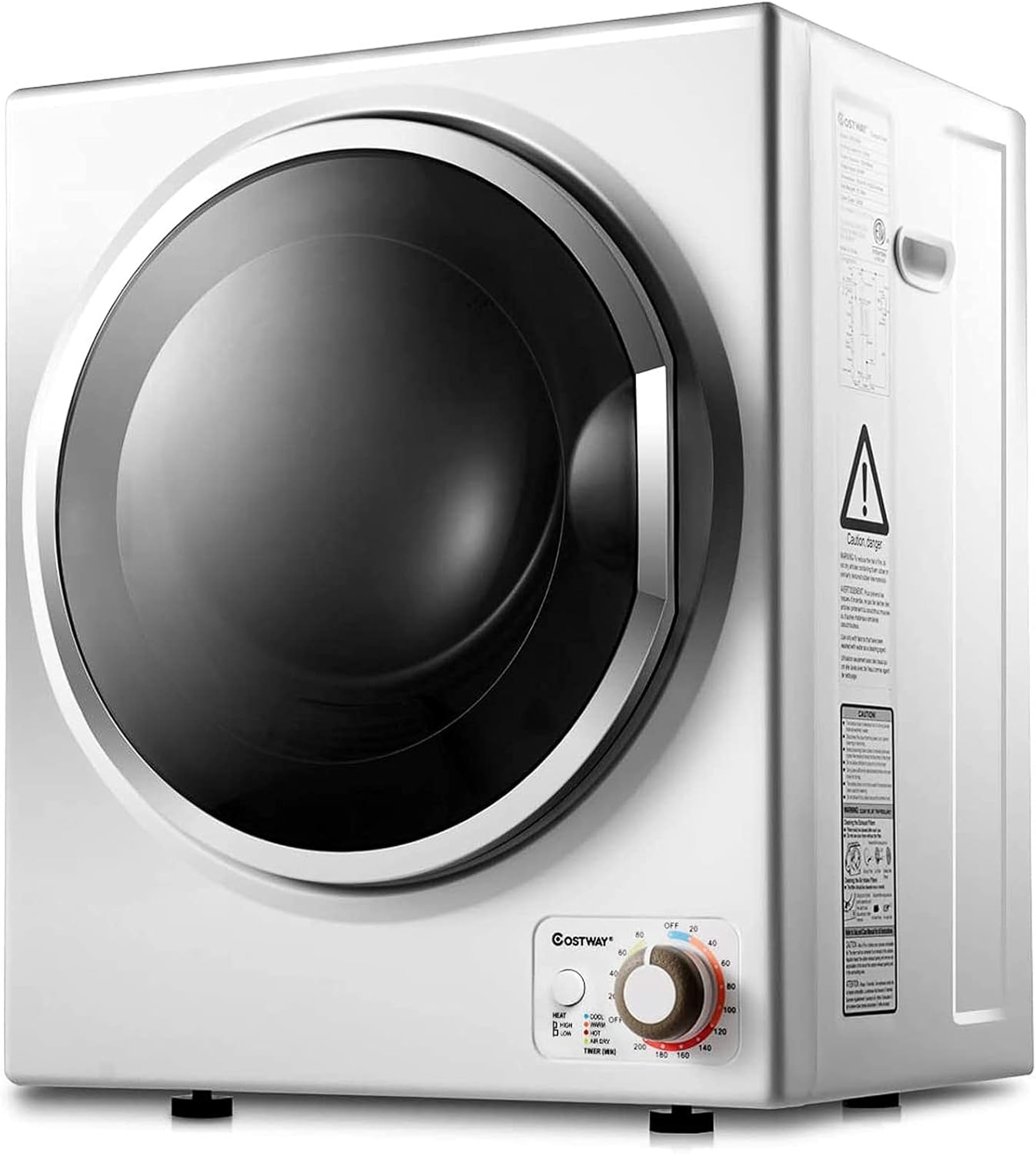
The loading style directly affects how you use the washer, how much it costs to run, and even where you can install it. There's no "better" option—just what works best for your situation.
Front-loaders dominate globally because of their efficiency, but top-loaders have real advantages in specific situations.
Front-Load Washing Machines
The door in front is standard on most modern, efficient models. The drum spins horizontally, making clothes tumble over themselves during the wash cycle.
Why they clean better: The tumbling action removes dirt more effectively than vertical motion. Studies show they remove up to 25% more tough stains using the same amount of water and detergent.
Proven savings: Full-sized washers that have earned the ENERGY STAR use 14 gallons of water per load, compared to the 20 gallons used by a standard machine. On energy, they save up to 30% per cycle. Over a year, that's around $200-300 off your bills.
Key advantages:
- Much lower water and energy consumption
- More efficient and gentle cleaning
- Larger capacity options (up to 6+ cubic feet)
- Can be stacked with dryers
- Top can be used as work surface
Things to consider:
- Need front clearance to open door (at least 24 inches)
- Requires bending down to load and unload
- Basic models may vibrate more
- Cycles typically longer (50-90 minutes)
Best for: Spacious laundry rooms, anyone seeking maximum efficiency, families washing large volumes, and those looking to save on utility costs long-term.
Top-Load Washing Machines
The lid on top and central agitator characterize this traditional style. Clothes sit submerged in water during the entire wash.
Real practical perks: Tossing in forgotten items is easy—just pause and open. No bending required, which matters a lot for older folks or anyone with back problems.
Key advantages:
- Takes up less floor space (great for hallways)
- More ergonomic to use
- Faster cycles (30-50 minutes)
- Usually more affordable
- Simpler, cheaper maintenance
Things to consider:
- Uses 40-60% more water per load
- Higher energy consumption
- Limited capacity (rarely exceeds 5.5 cu. ft.)
- Can be rougher on delicate fabrics
- Top can't be used as work surface
Best for: Compact spaces, seniors, anyone prioritizing speed, tighter budgets, and situations where quick solutions matter.
Smart choice: If your laundry room has the space, go with front-load. The monthly savings pay back the higher price in 2-3 years.
Inverter Motors: The Investment That Pays for Itself
Inverter technology has revolutionized washers over the past decade. It's not just hype—these are real, measurable benefits that impact your wallet every month.
Traditional motors turn on and off during cycles, creating power surges. Inverter motors run continuously, adjusting speed as needed without wasting energy.
How It Works and Why It's Superior
Inverter motors don't have carbon brushes or belts—parts that wear out fast in conventional motors. They're directly connected to the drum and electronically controlled.
This design allows precise rotation control. The washer senses the load weight and automatically adjusts to the ideal speed for that specific load, never overworking the motor.
Real proven savings: Manufacturers claim up to 40% energy savings compared to traditional motors. In practice, users report 25-35% reduction on electric bills—about $30-60 monthly for families washing 4-5 times weekly.
Key benefits:
- 30-40% lower electricity consumption
- Extremely quiet operation (under 50 decibels)
- Superior durability—10-year motor warranty
- Less vibration during spin cycle
- Better fabric care through precise control
Payback time: Inverter washers cost on average $400-600 more than equivalent conventional models. With $40/month savings, you recover that difference in 10-16 months and keep saving for years after.
Worth noting: The extended 10-year motor warranty offered by most manufacturers shows their confidence in durability. Conventional motors typically get only 1-2 years of coverage.
For those working from home who need a quiet environment, also check out our guide on essential home office tech.

Energy Efficiency: What You'll Actually Spend Monthly
Understanding ENERGY STAR ratings helps you predict your real operating costs. Over the lifetime of the product, models that have earned the ENERGY STAR can save about $530 in energy costs.
The average American family washes about 300 loads yearly. Choosing an efficient model makes a massive difference over time.
Calculating Your Real Usage Cost
Let's break down the monthly costs for different efficiency levels, assuming an average family doing 4 washes weekly.
ENERGY STAR Certified Model
- Consumption per cycle: 0.65 kWh
- 16 monthly washes: 10.4 kWh
- Monthly cost (at $0.15/kWh): $8.84
- Annual cost: $106
Standard Efficient Model
- Consumption per cycle: 0.95 kWh
- 16 monthly washes: 15.2 kWh
- Monthly cost: $12.92
- Annual cost: $155
Basic Model
- Consumption per cycle: 1.35 kWh
- 16 monthly washes: 21.6 kWh
- Monthly cost: $18.36
- Annual cost: $220
The difference between an ENERGY STAR model and a basic one is $114 yearly just on electricity. Add water savings (efficient models use 30-40% less) and the gap grows to $180-250 annually.
Tips to Save Even More
Even with an efficient washer, your usage habits hugely impact final consumption.
Always run full loads: Washing half-loads wastes energy. If you urgently need to wash a small amount, use the half-load setting if available—it adjusts water and energy use.
Prefer cold or warm water: 85-90% of a wash cycle's energy goes to heating water. Modern detergents work great in cold water. Save hot water for heavily soiled items or bedding.
Use eco programs: Eco mode washes at lower temps and takes longer, but saves up to 50% energy while maintaining good cleaning results.
Timing matters: If your area has time-of-use rates, do laundry after 10 PM or on weekends. Savings can hit 40% on energy costs.
For more energy-saving tips, explore our guide on understanding watts and volts.
Spin Speed: Finding the Perfect Balance
RPM (revolutions per minute) during the spin cycle determines how damp your clothes come out. More RPM means drier clothes, but it's not that simple.
Spinning removes physical water from fibers by rotating clothes rapidly. Higher speed means more centrifugal force and more water expelled.
RPM Ranges and Their Uses
800-1000 RPM (Low speed)
Good for delicates, silks, lingerie, and thin fabrics. Removes enough moisture without damaging sensitive fibers.
Clothes come out damper and take longer to dry on the line. On cloudy days or in apartments without sunlight, this can be problematic.
1000-1200 RPM (Medium speed - IDEAL)
Washers with higher spin speeds extract more water, reducing drying time and energy use. If your washer has a high spin speed (typically 1,200 RPM or more), it's likely contributing to overall energy efficiency. This is the sweet spot for 90% of situations. Independent tests show the difference between 1000 and 1400 RPM in final dryness is minimal—only about 5-8%.
Clothes come out appropriately damp for the clothesline, drying in 3-5 hours in sunlight. Noise and vibration stay acceptable, and fabrics don't suffer excessive wear.
1200-1600 RPM (High speed)
Removes maximum moisture possible. Useful for thick towels, heavy bedding, and when you need things dry fast.
The downside: clothes come out extremely wrinkled, making ironing much harder. Vibration and noise increase considerably. Fabric wear accelerates.
Expert recommendation: Washers with 1000-1200 RPM offer the best value. The real drying difference versus 1400-1600 RPM models doesn't justify the higher price and extra fabric wear.
Essential feature: Choose models with adjustable speed. Use 800 RPM for delicates and 1200 RPM for towels and jeans, maximizing each item's lifespan.
For more on optimizing your home tech, see our article on how to choose the right router.

Essential vs Unnecessary Features: What Really Matters
Modern washers come loaded with programs and features. But how many will you actually use? Let's separate what adds value from what's just marketing fluff.
Paying extra for features you'll never use is wasted money. On the flip side, some technologies genuinely make daily life easier and are worth every penny.
Features Worth the Investment
Auto detergent dispensing: The system detects load weight and releases the exact amount of detergent and softener needed. Eliminates waste, prevents excess suds, and extends machine life.
Estimated savings: $25-40 monthly on cleaning products, plus better-rinsed clothes.
Add garments function: Lets you pause the cycle in the first few minutes to toss in forgotten items without losing water or starting over. Super handy in busy households.
Steam cleaning: Many modern washers have eco-friendly settings designed to reduce energy and water use, and steam is one of them. It eliminates 99.9% of bacteria, dust mites, and allergens without chemicals. Perfect for folks with allergies, babies, or pets. Also reduces wrinkles, making ironing easier.
Efficient quick wash: Not just any quick cycle—but ones that genuinely clean well in 15-30 minutes. Perfect for lightly soiled daily wear or emergencies.
Tub self-clean: Removes residue, mold, and odors from inside without chemicals. Keeps the machine sanitized and prolongs lifespan. Use monthly.
Features You Can Skip
Wi-Fi connectivity and apps: Sounds modern, but in practice, very few people use it past the initial novelty. Adds unnecessary cost and another potential point of failure.
Excessive programs (20+ cycles): Most people regularly use only 3-4 programs: normal, delicate, quick, and heavy. Having 25 options doesn't add real value.
Super fancy touch displays: Physical buttons last longer and are easier to use. Overly sophisticated displays make the product pricier and can fail after a few years.
Internal LED lighting: Looks nice but is completely unnecessary. You can see clothes perfectly fine without it.
Built-in fragrance system: Adds costs without need. Good fabric softener or sachets in your closet work better.
Buying tip: Prioritize investing in an inverter motor, proper capacity, and quality materials. Extra features should come after, not before, these priorities.
Washer-Dryer Combos: When They Actually Make Sense
Combining washing and drying in one appliance sounds like the perfect solution. But there are important pros and cons you need to know before deciding.
All-in-one units are ideal for specific situations, not for everyone. Understanding their limitations prevents future frustration.
Real Advantages of 2-in-1
Massive space savings: In small apartments where there's no room for two appliances, a combo solves the problem completely. You gain valuable square footage.
Unbeatable convenience: Load dirty clothes in the morning, set it to finish when you get home from work. Clean, dry clothes ready to go without hanging on the line or transferring to a dryer.
Always-ready clothes: Especially useful during rainy periods or for apartment dwellers without outdoor space. Never depend on weather to do laundry again.
Best for: Small apartments, super busy people, places without laundry rooms or clotheslines, very humid or frequently rainy climates, and those interested in smart home integration.
Important Limitations to Consider
Reduced drying capacity: If the machine washes 5.0 cu. ft., it typically dries only 2.5-3.0 cu. ft. That means to dry a full wash load, you need to split it into two drying cycles.
Higher energy consumption: Drying clothes uses tons of energy. A complete drying cycle consumes the equivalent of 3-4 wash cycles in electricity. Daily drying can add $60-90 monthly to your bill.
Longer cycles: Washing and drying together can take 4-6 hours. Even using just the wash function, these models tend to take longer than wash-only machines.
Accelerated wear: Since the same equipment does two heavy-duty jobs, lifespan tends to be shorter. While regular washers last 12-15 years, combos typically hit 8-10 years.
More complex, costlier maintenance: Two systems in one means double the potential problems. Repairs cost more and parts are more specific and expensive.
Cost-Benefit: Do the Math
Compare initial investment and operating costs:
Factor | Regular Washer | Washer-Dryer Combo |
|---|---|---|
Initial Investment | $600-1,000 | $1,200-2,000 |
Monthly Energy Cost | $10-20 | $45-75 |
Expected Lifespan | 12-15 years | 8-10 years |
Maintenance Cost | $150-300/year | $300-600/year |
Convenience | Medium | Very High |
Bottom line: Combos make sense if space is your biggest issue or if convenience is worth more than savings. If you have room and access to a clothesline, a regular washer is more economical long-term.
To complete your laundry setup, check out our recommendations for
Materials and Durability: What to Look For
Build quality determines how long your washer lasts and how well it performs during that time.
Stainless Steel vs Plastic Drum
Stainless steel drum is standard in quality models. Handles high temps better, doesn't rust, won't chip, and is much more hygienic. Lasts the entire lifespan of the machine.
Plastic drum appears in budget models. Works fine initially but can crack after years of use and struggles with high temperatures. If your budget allows, always choose stainless.
For more tips on setting up a complete home, visit our guide on cable management for your desk.
Frequently Asked Questions
What washing machine capacity should I choose?
For 1-2 people, choose 3.5-4.0 cubic feet. Families with 3-4 people need 4.5-5.0 cubic feet. Five or more people should get 5.5+ cubic feet. The ideal size depends on how often you do laundry and whether you wash bulky items like comforters regularly.
Are inverter motors worth it?
Absolutely. Inverter motors save up to 40% on energy, run quieter, last longer, and typically come with extended warranties up to 10 years. The initial investment pays for itself in 2-3 years through energy savings alone.
Front-load or top-load washing machine?
Front-load washers offer better cleaning, larger capacity, and use less water and energy. Top-load washers are ideal for small spaces and easier to use if you have trouble bending down. Your choice depends on your space and physical needs.
How many RPMs do I need?
Between 800-1200 RPM is ideal. Higher speeds don't significantly improve drying and can wrinkle clothes more. Models with 1000-1200 RPM offer the best balance between efficient drying and fabric care.
Is a washer-dryer combo worth it?
It's worth it if you're tight on space or can't hang dry clothes. It saves space and time but uses more energy than separate units. The drying capacity is typically half the washing capacity.
How can I save energy when using my washing machine?
Always run full loads, wash in cold water when possible, use eco programs, measure detergent correctly, and take advantage of off-peak electricity rates. These habits can cut consumption by up to 50%.
How long does a good washing machine last?
With proper maintenance, a quality washer lasts 12-15 years. Models with inverter motors tend to last even longer, easily reaching 15-18 years of continuous use.
For related appliance guidance, check out how to choose a refrigerator.
Conclusion
Now you know the essential criteria for choosing the ideal washing machine and avoiding buyer's remorse. Proper capacity, an inverter motor, and energy efficiency are the three pillars that guarantee satisfaction and savings for years to come.
Remember: investing a bit more in quality pays off quickly through monthly savings on water and electric bills. A well-thought-out decision today means peace of mind and perfectly clean clothes for the next 10-15 years.
Before finalizing your purchase, compare current prices, read real user reviews, and check warranty terms. With the information in this guide, you're ready to make a smart investment that'll make your daily life easier for many years.
Explore our complete category of recommended home appliances to equip your house with top products.
For more tech buying guides, check out: