How to Choose a Great Power Bank: Buying Tips
Find the perfect power bank to never run out of battery again. Practical guide with tips and recommended models.
You're in the middle of an important trip when you realize: your phone is down to 5% battery. No outlet nearby, that feeling of panic hits. Sound familiar? It's a situation that 82% of Americans have faced at least once.
The good news is that the right power bank solves this problem for good. But with so many options on the market, choosing the right model can be confusing. Capacity, charging speed, number of ports, supported technologies — there are many details to evaluate.
In this complete guide, you'll discover exactly how to choose the perfect power bank for your needs. I'll show you the essential technical criteria, differences between technologies, realistic price ranges, and even practical tips to make your portable charger last for years.
Get ready to never struggle with a dead battery again. Let's start with what matters most: understanding what really defines a great power bank.


Table of Contents
- Why a Great Power Bank Makes a Difference
- Capacity in mAh: How Much You Really Need
- Charging Speed: Quick Charge vs Power Delivery
- Number and Types of Ports That Matter
- Size, Weight, and Real Portability
- Essential Protection Technologies
- Extra Features Worth Having
- Frequently Asked Questions
- Conclusion
Why a Great Power Bank Makes a Difference
The frustration of watching your phone die at the worst possible moment isn't just an inconvenience. For many people, it means missing an important meeting, being without GPS mid-route, or not being able to call a rideshare when you need one most.
A reliable power bank completely eliminates that anxiety. It works like portable energy insurance, ensuring your devices are always ready when you need them. And unlike a conventional backup battery, you can charge not just your phone, but also wireless earbuds, smartwatches, and even tablets.
Freedom to Use Your Phone Without Fear
With a good portable charger, you no longer need to ration your phone's battery throughout the day. Want to take photos, watch videos, or use social media without worrying? A power bank guarantees that freedom.
This is especially valuable for people who work with their phone. Salespeople, gig economy workers, photographers, and digital marketers depend on constant battery life. The right power bank transforms into an essential work tool, not just an accessory.
Real Long-Term Savings
Replacing a phone's internal battery costs between $50 and $150 at authorized service centers. A quality power bank costs about the same, but preserves your original battery for much longer.
How? When you charge your phone via power bank instead of leaving it plugged into the wall all day, you reduce the internal battery's charge cycles. Fewer cycles mean less wear and more years of peak performance. In the end, the investment pays for itself.
Ready for Emergencies
Power outages, long trips, outdoor events, camping — situations where outlets simply don't exist. Having a charged power bank in these moments can be the difference between solving a problem and being completely stranded.
Many current models can charge a smartphone between 4 and 6 times before needing to be recharged themselves. That means days of total autonomy, perfect for adventure lovers or anyone who just wants extra security in their daily life.
Capacity in mAh: How Much You Really Need
A power bank's capacity is measured in mAh (milliampere-hours) and determines how many times you'll be able to recharge your devices. But here's the catch: the number printed on the box isn't exactly what you'll get.
There's natural energy loss during transfer. Approximately 20 to 30% of total capacity is lost as heat and voltage conversion. This means a 10,000 mAh power bank actually delivers about 7,000 to 8,000 mAh to your devices in practice.
Capacity Ranges and Their Ideal Uses
5,000 mAh — For Occasional Emergencies: These compact models fit in your pocket and are perfect for anyone who only needs an occasional extra charge. They can recharge a modern smartphone (with a 4,000 mAh battery) about once. They're ideal for people who don't spend much time away from home or have frequent access to outlets.
10,000 to 15,000 mAh — The Perfect Balance: This is the most popular range with the best value. It offers 2 to 3 full smartphone charges, enough for a full day away from home. Weight is still manageable (7 to 10.5 ounces) and size fits easily in backpacks or bags.
20,000 mAh or More — Maximum Autonomy: For frequent travelers, professionals who use their phones intensively, or anyone going days without outlet access. These models guarantee 4 to 6 full charges, but are considerably heavier (14 to 21 ounces). Think of them as "portable power stations."
How to Calculate How Many Charges You'll Get
The math is simple: divide the power bank's real capacity by your phone's battery capacity. For example, a 10,000 mAh power bank with actual capacity (after losses) charging an iPhone 15 with a 3,349 mAh battery:
10,000 ÷ 3,349 = approximately 3 full charges.
Always remember to factor in energy losses. A power bank labeled 10,000 mAh delivers about 7,000 to 8,000 effective mAh. Never trust the package number 100%.
Charging Speed: Quick Charge vs Power Delivery
The speed at which your phone charges is determined by wattage, measured in watts (W). Higher wattage means faster charging. But there are specific technologies that optimize this process.
The two main ones are Quick Charge (developed by Qualcomm) and Power Delivery (universal standard created by the USB Implementers Forum). Both significantly accelerate charging but work in slightly different ways.
Quick Charge: Android's Favorite
Quick Charge is widely used in Android smartphones from brands like Samsung, Motorola, and Google Pixel. Version 3.0 charges up to 80% faster than conventional chargers, while version 4.0+ can charge 50% of the battery in just 15 minutes.
To take advantage of this technology, both the power bank and your phone need to be compatible. If only one has Quick Charge, charging will happen at standard speed, without acceleration. Always check specs before buying.
Power Delivery: The Universal Standard
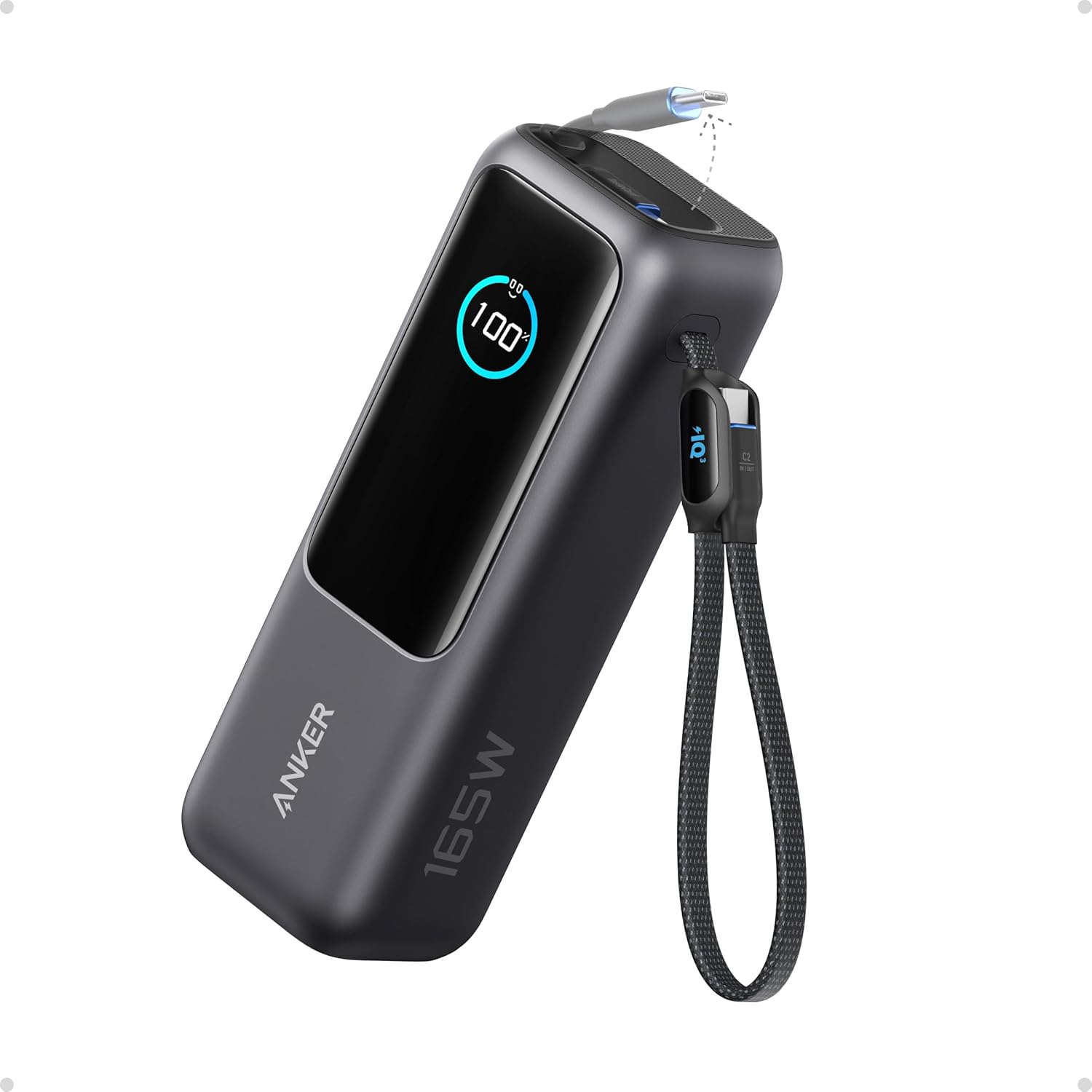
Power Delivery (PD) is the most versatile and modern standard. It works with virtually any device using USB-C, including iPhones (8 and up), iPads, MacBooks, and most recent Androids. Wattage ranges from 18W to an impressive 100W in some premium models.
PD's big advantage is intelligent communication between charger and device. They "negotiate" the ideal wattage automatically, protecting the battery and maximizing efficiency. For use with laptops, look for power banks with at least 45W PD.
Watts That Make a Practical Difference
5W to 10W: Slow charging. Avoid if possible. Takes 3 to 4 hours to fully charge a smartphone.
18W to 20W: Considered fast speed. Charges most phones from 0% to 100% in 1.5 to 2 hours. This is the minimum recommended nowadays.
25W or More: Super-fast charging. Some top-tier models reach 45W, charging 50% in just 20 minutes. Ideal for anyone who can't waste time.
Important: final speed also depends on the cable used. A poor-quality cable can limit wattage, negating the fast power bank's advantages. Invest in certified, high-quality cables.

Number and Types of Ports That Matter
Having multiple ports on a power bank is more than convenience — it's necessary for anyone charging several devices simultaneously. But not all ports are created equal, and understanding the differences prevents frustration.
USB-A: The Classic Still Relevant
USB-A ports are the traditional rectangular ones everyone knows. Despite being older, they remain extremely useful because most cables and accessories still use this standard. Many Bluetooth earbuds, smartwatches, and tablets come with USB-A cables.
Look for power banks with at least two USB-A ports if you typically charge more than one device. Also check if each port delivers sufficient wattage — some secondary ports offer only 5W, while the main one may reach 18W.
USB-C: The Future Is Now
USB-C is the most modern and versatile standard. Its main advantages include reversible design (plugs in either way), faster data transfer speeds, and support for much higher wattages. USB-C ports can deliver anywhere from 18W to 100W, depending on the model.
What's most interesting is that many modern power banks have bidirectional USB-C ports. This means the same port works both to charge the power bank itself and to charge other devices. Fewer cables to carry, more convenience in daily life.
Wireless Charging: Is It Worth It?
Some power banks offer induction charging (wireless). You simply place your phone on the power bank's surface and it starts charging — no cables needed. Sounds magical, but it has limitations.
Wireless charging is slower (typically 5W to 15W) and less efficient than wired. Plus, you lose about 30% more energy in the process. It's convenient for charging earbuds or a smartwatch while walking, but doesn't completely replace wired ports.
How Many Ports Do You Really Need?
One port: Sufficient only if you exclusively charge your phone.
Two ports: Ideal for most people. Charges phone + Bluetooth earbuds or smartwatch.
Three or more ports: Perfect for families or group travelers. Can charge multiple devices at once.
Remember: when you charge multiple devices simultaneously, the power bank's total wattage is divided between them. A 20W model with two ports in use will deliver about 10W to each device, making charging slower.
Size, Weight, and Real Portability
There's no point having a powerful power bank if it's so big and heavy you end up leaving it at home. The balance between capacity and portability is crucial for effective daily use.
Weight Range by Capacity
5,000 mAh: Between 3.5 and 5.3 ounces. Fits comfortably in pants or shirt pockets. Ultra-light and almost unnoticeable in bags.
10,000 mAh: Between 7 and 10.5 ounces. Similar to a modern smartphone's weight. Still fits in larger pockets, but better in backpacks or bags.
20,000 mAh: Between 14 and 21 ounces. Equivalent to two phones together. Really not for carrying in pockets — requires a backpack or bag.
30,000 mAh or more: Over 24.5 ounces. Some reach 2.2 pounds. These are true "power stations," recommended only for those who truly need this extreme capacity.
Dimensions That Fit Your Routine
Beyond weight, physical dimensions impact portability. A thin, elongated power bank is easier to store than a thick, square model, even with similar weight. Look for models with maximum thickness under 0.8 inches if portability is the priority.
For anyone carrying a backpack or large bag daily, size matters less. But if you're putting it in your pocket or small bags, prefer compact models up to 6 inches long and 2.8 inches wide. To give you an idea, that's approximately the size of a large phone.
Materials and Finishes
Power banks with aluminum finish are more resistant to drops and scratches, plus they dissipate heat better during charging. However, they're slightly heavier than ABS plastic ones.
Models with rubberized or silicone coating offer better grip and splash protection, but accumulate more dirt. For intensive use or outdoor environments, prefer aluminum. For casual urban use, quality plastic works fine.
The Dilemma: Capacity vs Portability
Here's the truth few sellers mention: you probably don't need a 20,000 mAh power bank for daily use. Most people struggle with battery only occasionally, not every day.
For 80% of users, a model between 10,000 and 15,000 mAh offers the ideal balance. You have enough autonomy for a full day and emergencies, without carrying a brick in your bag. Save giant models for long trips or specific situations.
If you know our complete guide to student laptops, you know we always recommend choosing equipment by actual use, not "just in case." The same goes for power banks: choose for your routine, not the exception.

Essential Protection Technologies
A cheap power bank without proper protections can literally explode or catch fire — and that's not an exaggeration. There have been documented cases of poor-quality power banks causing fires on planes, in cars, and in homes. That's why safety protections are absolutely crucial.
Overcharge Protection
This technology prevents the power bank's internal battery from charging beyond its maximum capacity. When it reaches 100%, the circuit automatically stops the energy flow. Without this, the battery can swell, leak, or even explode over time.
All minimally reliable models have this protection. If the seller doesn't explicitly mention it, be suspicious. It's like buying a car without brakes — simply unacceptable.
Overvoltage and Overcurrent Protection
These protections prevent voltage or current spikes from damaging both the power bank and connected devices. If there's a power grid fluctuation while you're charging the power bank, the circuit detects and cuts power before causing damage.
This protection is especially important in regions with unstable electricity or during storms. It works like a built-in stabilizer, protecting your equipment from dangerous voltage variations.
Thermal Protection Against Overheating
Lithium-ion batteries generate heat during charging — that's normal. The problem is when they overheat. Thermal protection constantly monitors internal temperature and reduces (or stops) charging if it detects excessive heat.
Ever noticed some power banks get really hot during use? That indicates either thermal protections are working correctly, or worse, that the product lacks adequate protection and is dangerously overheating. Quality models warm slightly, never hot enough to burn when touching.
Short-Circuit Protection
If there's a short circuit (direct connection between positive and negative poles), this protection immediately disarms the circuit, preventing sparks, fires, or explosions. It's an essential safety layer that can literally save lives.
Short circuits can happen through damaged cables, ports with dirt, or accidental contact with metal objects. A power bank without this protection can become a potential bomb in your backpack.
Certifications That Guarantee Safety
UL: In the United States, UL certification is the gold standard for power bank safety. Look for UL 2056 specifically, which is dedicated to portable chargers. Products with UL certification have passed rigorous safety testing.
FCC: Federal Communications Commission certification for electronic devices. Indicates the product passed strict safety and electromagnetic interference tests.
CE: European certification that attests conformity with safety standards. Present in most reliable imported products.
Power banks with all these certifications cost a bit more, but the price difference is minimal compared to the risk of damaging your devices — or worse, causing a serious accident. Never skimp on safety.
Extra Features Worth Having
Beyond basic technical specs, some additional features can transform an ordinary power bank into a truly useful tool. Let's separate what really adds value from what's just marketing hype.
LED Battery Level Indicator
This is one of the most useful features and should be considered mandatory. Knowing exactly how much charge remains in your power bank prevents unpleasant surprises when you need it most.
Indicators range from simple (4 LEDs representing 25% each) to precise digital displays showing exact percentage. For daily use, even the LED system works fine. What matters is not flying blind about available battery.
Pass-Through Charging
This technology lets you charge the power bank while it's charging other devices simultaneously. It's extremely practical when you have temporary outlet access and want to maximize it.
For example: you're at a café and only have 30 minutes before continuing your trip. With pass-through, you plug the power bank into the outlet and your phone into the power bank. Both charge at the same time, maximizing energy captured in that short period.
Built-In Cables
Some models come with cables embedded in the power bank body itself. This eliminates the need to carry separate cables, reducing the chance of forgetting or losing them. It's especially useful for frequent travelers or people prone to forgetting accessories.
The downside is that if the built-in cable breaks, you may end up with a partially useless power bank. That's why many models offer a built-in cable PLUS conventional ports — the best of both worlds.
LED Flashlight
May seem silly, but a built-in flashlight has saved many people in emergency situations. Whether during a power outage, searching for something in a dark bag, or walking in poorly lit places, having light always at hand is valuable.
Of course it doesn't replace a professional flashlight, but as a secondary feature in a device you already carry, it makes total sense. Some models even offer flashing SOS mode for emergencies.
Water and Dust Resistance (IP Rating)
For anyone practicing outdoor activities, working in external environments, or simply wanting more peace of mind, models with IP (Ingress Protection) certification are ideal. The most common rating is IP67, which guarantees total dust protection and temporary submersion up to 3.3 feet deep.
Obviously, power banks with these protections cost more, but they're worth every penny if you need extra durability. They're perfect for hiking, beach, camping, or construction work.
Features You Can Skip
Solar Panel: Sounds eco-friendly and cool, but it's inefficient. The tiny panels take days to charge the power bank — not practical for real use.
Excessive "Premium" Design: Faux leather finishes or flashy decorations make the product more expensive without adding functionality. Prefer quality internal components over aesthetic gimmicks.
If you're interested in smartwatches with health monitoring, you'll notice the same principle applies: useful functionality always beats flashy but impractical features. Focus on what you'll actually use day-to-day.

Frequently Asked Questions
What's the ideal power bank capacity for daily use?
For daily use, a power bank between 10,000 and 15,000 mAh is ideal. This capacity provides 2 to 3 full phone charges, perfect for anyone spending the day away from outlets.
Can a power bank damage my phone's battery?
No, as long as you use quality certified models. Reliable power banks have protection systems against overcharging, overvoltage, and overheating that protect both the device and your phone's battery.
How long does a power bank last before needing replacement?
A quality power bank lasts between 300 and 500 complete charge cycles, which equals more than 2 years of regular use. Durability depends on care: not leaving it plugged in after charging and avoiding prolonged heat exposure extend its lifespan.
Is it safe to leave a power bank charging overnight?
It's not recommended. Even with overcharge protection, leaving the power bank charging for many hours after reaching 100% can degrade the internal battery more quickly, reducing its lifespan over time.
Can I use my phone while it charges on a power bank?
Yes, you can use your phone normally while charging on a power bank. However, heavy apps like games or videos may slow down charging, as they consume energy simultaneously.
How can I tell if a power bank is good quality?
Check for certifications like UL 2056, FCC, or CE, protections against overcharge and short-circuit, positive user reviews, and manufacturer warranty. Be suspicious of very low prices or unrealistic capacities like 50,000 mAh for under $15.

Conclusion
Choosing a great power bank doesn't have to be complicated when you know the right criteria. Appropriate capacity for your use (10,000 to 15,000 mAh for most people), fast charging with at least 18W, multiple ports for versatility, and safety certifications are the pillars of a smart purchase.
Remember: the best power bank isn't the most powerful or the cheapest, but the one that balances capacity, portability, and safety for your specific routine. Assess your real need before investing — this prevents both overspending and buying something insufficient.
Now you're prepared to make an informed choice and never struggle with a dead battery again. Compare prices, read real user reviews, and invest in a reliable brand model. Your future self will thank you when you're away from home and need those crucial extra 20% of battery at the critical moment.
If you're also looking for reliable tech accessories, check out our guides on how to choose a router for better home connectivity, the best wireless chargers to complement your power bank, or our selection of must-have tech accessories for your home office to maximize your productivity.